If you’ve ever finished a ranked match thinking you did pretty well — got a few kills, survived a decent amount of time — and then watched your rank points barely move or even drop, you’re not alone. The rank system in Free Fire is one of those things that looks simple on the surface but has a lot going on underneath that most players never fully understand.
I’m going to walk you through all of it. How the tiers work, how points are calculated, why you sometimes lose more than you gain, and what you can realistically do to climb faster. No fluff, just the stuff that actually matters.
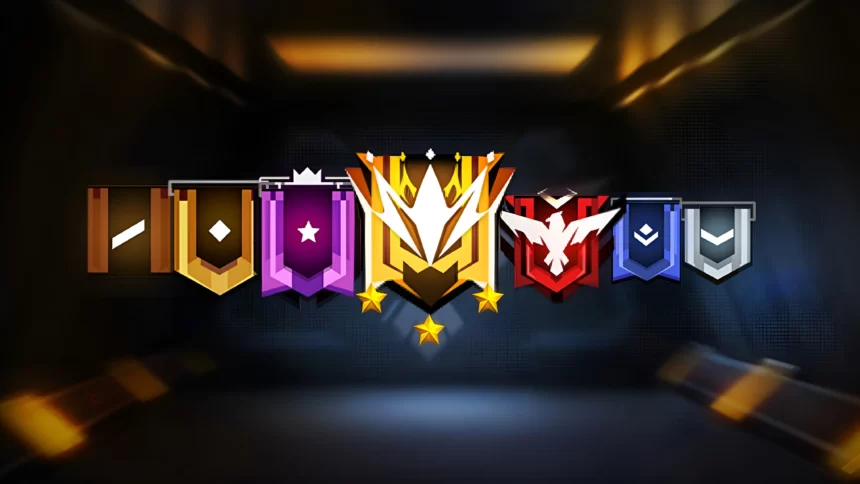
The Tiers — Where Do You Actually Stand?
Free Fire has seven main rank tiers and each one is split into sub-divisions. Here’s how they stack up:
| Tier | Sub-Divisions | What It Means |
|---|---|---|
| Bronze | I, II, III | Just starting out |
| Silver | I, II, III | Getting the basics |
| Gold | I, II, III, IV | Where most players live |
| Platinum | I, II, III, IV | Things get serious here |
| Diamond | I, II, III, IV | Top 20% of players |
| Heroic | Single tier | Top 5-10% |
| Grandmaster | Top 300 per region | Elite competitive players |
If you’re sitting in Gold or Platinum right now, you’re actually in pretty good company — that’s where the majority of active ranked players end up. Diamond is a real achievement. Heroic means you’re genuinely good at this game. And Grandmaster? That’s a different world entirely — we’re talking tournament-level players and full-time content creators.
Why Your Points Go Up and Down the Way They Do
Here’s the part most people don’t properly understand and honestly it changes everything once it clicks.
Your rank points after each match are determined by two things — where you finished and how many kills you got. That’s it. But here’s what trips people up: placement matters way more than kills.
Let me put some rough numbers to it so you can see what I mean:
| Where You Finished | Points You Earn |
|---|---|
| #1 — Booyah | +50 |
| Top 3 | +35 to +40 |
| Top 5 | +25 to +30 |
| Top 10 | +15 to +20 |
| Top 15 | +8 to +12 |
| Top 20 | +3 to +6 |
| Top 30 | 0 to +2 |
| Below top 30 | -10 to -20 |
See that last row? If you die in the first half of a 50-player lobby you’re actually losing points. Doesn’t matter if you got five kills before going down — dying 25th still costs you.
Kills give you roughly 3-5 bonus points each on top of your placement score. So getting kills is good, but they’re a bonus on top of surviving — not a replacement for it. A Booyah with zero kills still earns more than a 15th place finish with eight kills. Once that sinks in, you’ll start making completely different decisions in ranked matches.
The Demotion Trap Nobody Warns You About
When you first climb into a new sub-division Free Fire gives you a few Rank Protection Cards automatically. These stop you from immediately dropping back down if you lose your first matches in the new tier. A lot of players don’t even notice this is happening.
The problem is those protections run out. Once they’re gone, losing matches can and will push you back below the sub-division threshold and you’ll get demoted. This is why so many players feel like they keep bouncing between the same two sub-divisions — they climb up, burn through their protection cards without building a point buffer, then slide back down.
The fix is simple once you know about it. When you first reach a new sub-division, treat the next two or three matches like they really matter. Play your best, play safe, build a buffer above the minimum threshold before your protection cards expire. Once you’ve got 30-40 points of cushion above the floor you can afford to have a bad match without losing the sub-division.
What Each Tier Actually Feels Like
Bronze and Silver — honestly these tiers are pretty forgiving. A lot of new players, a lot of people who’ve never really thought about strategy. If you’re here, just focus on not dying early. Seriously, that’s the main thing. Land somewhere quiet, loot up properly, follow the zone. You don’t need to be mechanically good to get out of these tiers — you just need to survive longer than half the lobby.
Gold — this is where things start to actually feel like a competitive game. Players here understand basic mechanics, can handle gunfights, and make some decent decisions. You’ll start running into people with real playstyles and preferences. A lot of casual players plateau here because they keep playing ranked like it’s casual mode. If that’s you — it was me too at some point — the shift starts with caring about where you finish, not just how many kills you get.
Platinum — real turning point. Players here have figured out rotations, they use cover properly, they know how to third party. Lobbies feel noticeably harder and your old strategies stop working as reliably. Getting through Platinum sub-divisions requires being deliberate about every decision. You can’t just wing it anymore.
Diamond — if you reach Diamond you’re genuinely good at this game. Top 20% of players in your region. Fights are faster, lobbies are more competitive, and the margin for error in the late game gets very thin. Getting here is something to be proud of.
Heroic — top 5-10%. These players play ranked seriously. They study their own gameplay, they have refined strategies, and very few of their deaths are accidental. If you’re pushing for Heroic you already know what you’re doing and this guide probably confirms things you’ve already figured out.
Grandmaster — top 300 players per region per season. I’ll be real with you — if this is your goal, you probably don’t need a guide. These are people who dedicate significant time specifically to ranked performance. Aspirational target for most players.
Season Resets — What Actually Happens to Your Rank
Every few months a ranked season ends and your rank gets partially reset. Not fully reset — you don’t go back to Bronze. But you do drop a few sub-divisions. A Diamond player might start the next season at Platinum or low Diamond depending on exactly how Garena applies the reset formula that season.
This is actually useful to know because the start of every new season is the best time to push rank aggressively. Higher-rank players are re-climbing and haven’t settled into their natural lobbies yet. The first two or three weeks of a new season consistently produce softer lobbies than mid-season. If you want to make serious rank progress, start pushing from day one of the new season rather than waiting until it’s already three weeks in.
The Rewards — What You Actually Get
At the end of each season you get rewards based on the highest tier you reached. The higher you climbed the better the rewards.
| Tier Reached | What You Get |
|---|---|
| Bronze | Basic bundle |
| Silver | Badge + costume piece |
| Gold | Badge + outfit |
| Platinum | Badge + weapon skin |
| Diamond | Badge + exclusive outfit + gun skin |
| Heroic | Exclusive bundle + title |
| Grandmaster | Premium bundle + permanent title |
The Heroic and Grandmaster rewards are legitimately exclusive — you can’t buy them with diamonds, you can’t get them any other way. That’s what makes them meaningful in a game where almost everything else has some kind of purchase path.
Why Your Rank Might Have Stalled
If you’ve been stuck at the same tier for a while, there’s usually a specific reason. Here are the most common ones and what they actually mean:
You’re fighting too much and finishing outside the top 20 regularly. Check your average placement over your last ten matches. If it’s below 15th place consistently, your rank will stall or drop regardless of how many kills you’re getting.
You’re burning out in long sessions. After two or three hours of ranked your decision-making gets worse without you noticing. Three focused matches where you’re fully switched on beats eight distracted matches every time for rank progression.
Your character combo is built for kills not survival. Rush combos are fun but they optimize for eliminations over placement. If you’re stuck at a specific tier, try running a survival combo for a week and see if your average placement improves.
Your device is holding you back. This one is easy to overlook but it’s real — lag and input latency on budget phones genuinely affect fight outcomes at competitive rank levels. Optimizing your device performance using the guides on this site can remove a handicap you didn’t know you had.
Frequently Asked Questions
Q: How long does it realistically take to reach Heroic? For a player who’s actively applying good ranked strategy, one to two seasons from Gold is achievable. For a casual player who’s not consciously working on it, it could take much longer or never happen depending on how much they play.
Q: Do my kills matter at all? They matter but they’re secondary. Think of kills as a bonus on top of placement. Three kills and a top 5 finish is great. Eight kills and dying 22nd is a waste of a match for rank purposes.
Q: What if I don’t finish a season — does my rank disappear? Your rank stays where it is. No decay for inactivity. You’ll just miss out on seasonal rewards if you don’t hit the minimum thresholds.
Q: Is solo queueing or squad play better for rank pushing? Squad with people you actually communicate with is better almost every time. Solo queueing works if you’re significantly better than your current rank level but it’s harder to rely on for consistent progression.
Q: Can FF Kipas actually help with ranked performance? On budget and mid-range phones, yes. Stable FPS and lower input latency mean your decisions translate to actions more reliably — and in late-game ranked fights where everything is tight, having your device performing at its best instead of throttling makes a real difference.









Akun ff ya sudah kalau begitu kau tak pernah ada di